Omni Intelligence
Allocate
Intelligence.
Become AI‑Native.
Teams come to me when they know AI matters but not where it should live. I translate founder vision and real‑world constraints into technical architecture — allocating intelligence across workflows, products, and operations.
What I Do
Three ways I bring AI into production.
AI Systems Architecture
Designing multi-agent workflows, RAG pipelines, and AI-native product systems that go from prototype to production — built for real-world constraints.
Product Intelligence
Embedding intelligence into products through LLMs, knowledge systems, and autonomous agents that adapt, personalise, and improve over time.
Business Strategy
Translating AI capability into business value — scoping the right system for the right problem, with a clear path from proof-of-concept to production ROI.
How I Work
A structured approach to building with AI.
01
Diagnose
Map where intelligence should live.
We audit your existing workflows, tools, and data to uncover inefficiencies and opportunities for intelligence allocation. Every system is mapped for clarity — nothing assumed.
Selected Work
Projects that shipped.
Meterbolic
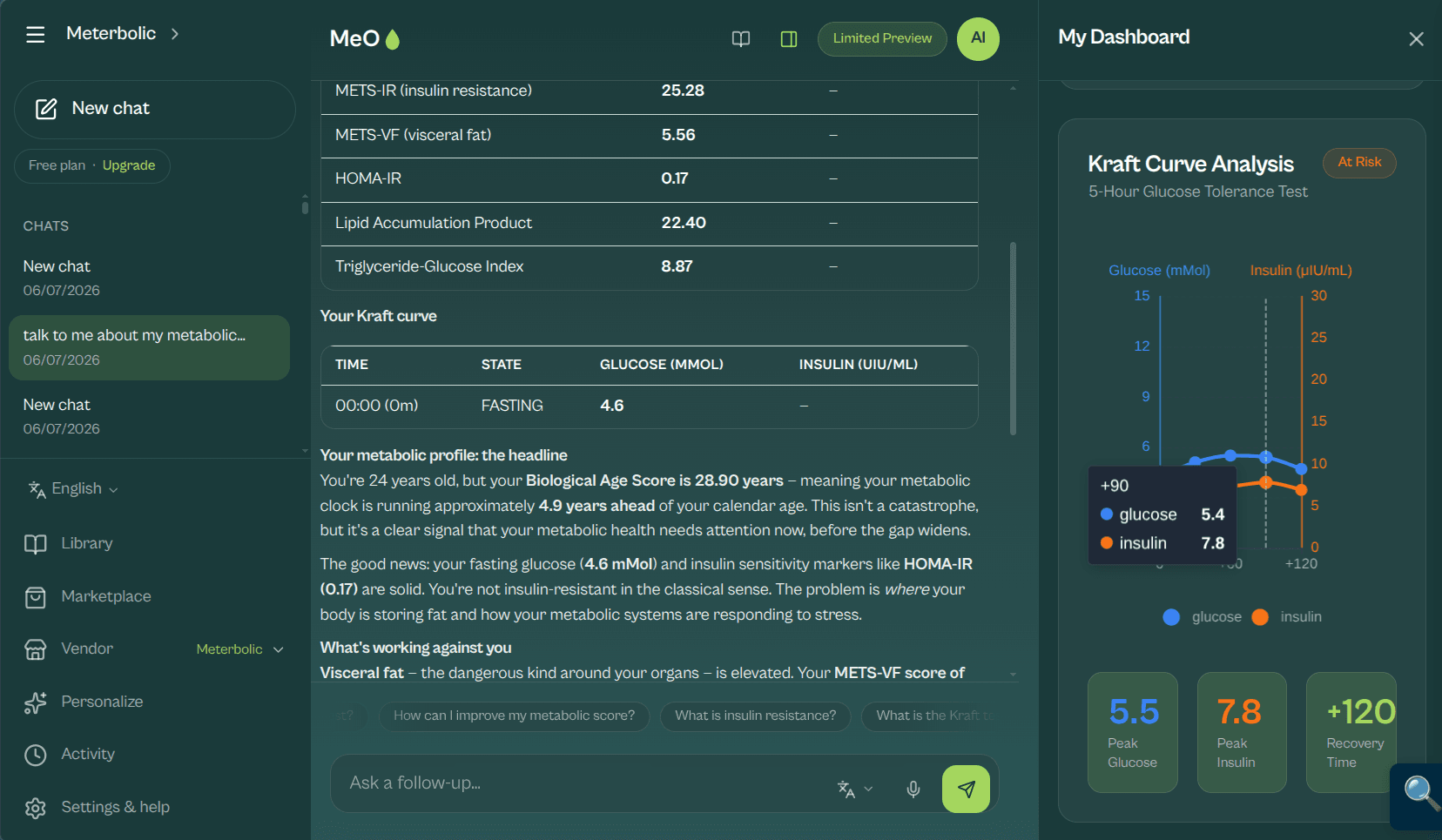
MeO — Agentic Clinical Platform
Meterbolic needed an AI layer for their metabolic health practice — one that could guide patients through home testing protocols, surface personalised clinical insights, and give practitioners a between-session view of each patient's progress.
I designed and built the complete AI system: a multi-agent LangGraph pipeline with specialised agents and workflows grounded in clinical knowledge via RAG, a safety engine that escalates to human clinicians on any ambiguous or high-risk input, and voice adaptation for patient-facing and practitioner-facing outputs. The first demo secured Meterbolic's first clinical partner. Now in beta.
Meterbolic
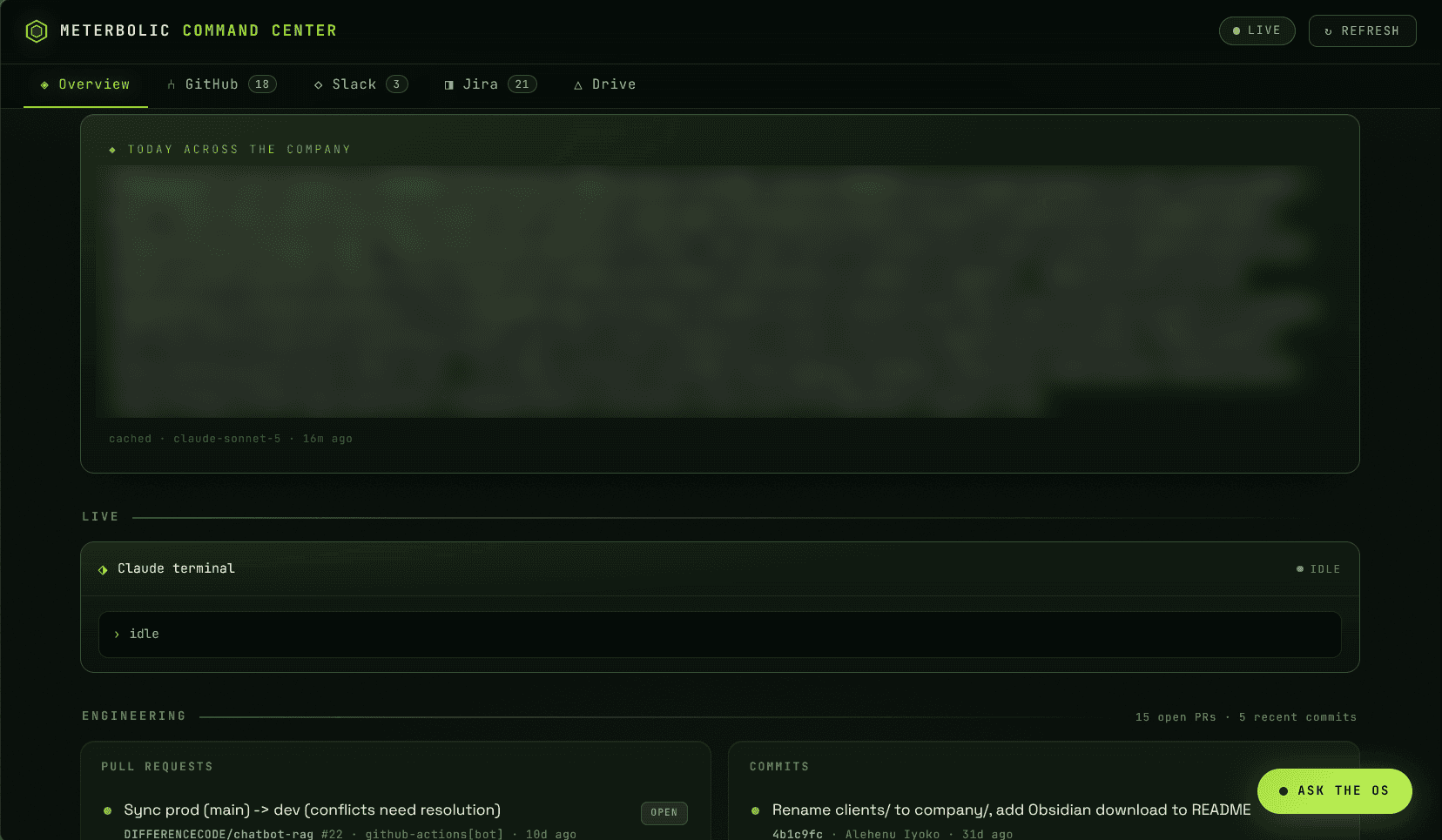
Command Center — Agentic Operations OS
Meterbolic's operations lived across GitHub, Slack, Jira, and Drive — with no single view of what was shipping, what was blocked, or who was waiting on whom. Status lived in people's heads and got reconstructed in meetings.
I built a live operations OS that syncs every source into one command center: an AI-written daily briefing of what shipped, what's blocked, and what was discussed across the company; sprint and workload views by priority, status, and assignee; and an "Ask the OS" interface for querying company state in plain English — with a Claude agent terminal wired in to act on it.
Thinking
Where I share ideas.
Alechenu Iyoko
AI engineering and startup execution — lessons from building agentic systems for real businesses.
X
@_lechiyoko
Brief takes on AI engineering, product development, and industry intelligence — from whatever I'm currently building.
Substack
@lechiyoko
Longer essays on human–machine cognition, machine intelligence augmenting human intelligence, and Africa's technological future.
Contact
Ready to become AI‑native?
Let's design where intelligence should live in your organisation. I work with a small number of clients at a time — the first conversation is always free.
Good fit if you are...
- Startups building AI-native products and need architecture, not just code
- SMEs whose teams use AI tools but workflows haven't meaningfully changed
- Founders with AI ideas but no clear roadmap or system design
- Companies wanting to automate operations but unsure where to start
How do we connect?